Breast Feeding Twins: Developing a Healthy Milk Supply

Congratulations on your Decision to Breast Feed your Twins!

You’ve made a wise decision because there is no better, complete nutrition than your own breast milk, custom-created by your body, specifically and tailor-made just for your babies.


Of course, there are reasons that exist that may cause you to choose formula-feeding over breastfeeding. There may be medical, health or medication factors; long-term, unplanned separation from your babies; or simply that you prefer to formula-feed. It’s completely your choice! However, if your decision to formula-feed is based on a fear that you won’t be able to successfully breastfeed two babies, or because you’re concerned that you will not be able to develop and maintain enough of a milk supply to adequately nourish your babies for healthy growth and development, then please read on for some valuable, reassuring information and tips that may ensure your breastfeeding success!


On occasion, there are women whose bodies simply don’t produce an adequate milk supply (even for one baby), regardless of consistent and varied efforts. The reasons for this condition are varied, but it is fairly rare for a woman to give birth and not be able to produce (and grow) a milk supply sufficient for her baby(ies).


Sometimes, a baby may be unable to breastfeed due to, for example, prematurity; a birth defect of the mouth (such as a cleft palette); a lack of a strong suck reflex, etc., and no matter how much effort is made to encourage breastfeeding, baby simply must be fed via bottle or even tube-fed in order to ensure proper nutrition. If the inability to nurse is due to a baby-related issue, some moms choose to pump their breast milk and bottle feed for anywhere from a couple of weeks to over a year in order to ensure that their baby still is fed their milk.


In most mother/baby situations, however, the vast majority of women will naturally begin to lactate (produce milk) as the next natural step in their child-bearing process, the baby will quickly learn the correct method for latching and feeding, and with enough guidance, support, and patience, combined with healthy doses of desire, commitment, and perseverance, they will together become very successful and happy breastfeeding couples (or, with twins: trios!).


If you desire to successfully breastfeed your twins, your success is more than possible … it’s quite probable!


If, however, you’ve tried, met with challenges, and simply decided to bottle-feed with formula (or to pump and bottle feed with breast milk), know that all options are fine because you’re successfully caring for your baby(ies) just the same.


When and Why the Lactation Process Begins

Lactation (breast milk production) is caused and controlled by the hormones prolactin and oxytocin. Prolactin stimulates milk production and oxytocin controls the milk ejection reflex, also referred to as the “let down” from the mammary glands of the breast. Breastfeeding immediately after birth causes oxytocin to stimulate the uterus to contract down to its smaller, pre-pregnant size, and is believed to help reduce delivery blood loss. This process is extremely important and emphasizes how breastfeeding is a necessary function for mothers.


Prolactin increases during pregnancy but the high levels of the hormones estrogen and progesterone prevent any milk production. After birth, the levels of estrogen and progesterone drop, allowing the prolactin to begin milk production. Prolactin also decreases after childbirth, but is released with each breastfeeding as the nipple stimulation signals the brain. In the brain, the hypothalamus triggers the pituitary gland to release more prolactin as the mother continues feeding. If a mother ceases to feed or never puts her baby to the breast for more than a few days, her prolactin will drop so low that she is unable to produce milk.


Newborns have a strong, instinctive impulse to feed at the breast as well. The baby is born with a sucking and rooting (the act of searching for the breast with his mouth) reflex and the ability to smell his mother. The baby is drawn to the mother and her nipples by its strong sense of smell, and can distinguish his mother from any other mother.


Keep this in mind, too: Breastfeeding is a natural function but is not necessarily a natural instinct for mothers. As opposed to the sheep that gives birth in the pasture, we humans need to be taught and encouraged.

Your first milk

Immediately after birth, and up until 24-36 hours, your breasts will secrete colostrum, also called “first milk”. Because your babies have been fed continuously in utero, they will not be “hungry” in the way we perceive hunger. Because babies are born with an enormously strong need to suck (in fact, the jaw and mouth muscles are the strongest in the body at this time), she will immediately root for the breast as soon as he or she is placed in your arms. With the initial and consistent nipple stimulation, your colostrum will let down. Colostrum is yellow-orange in color, is thick in consistency, and is loaded with antibodies to fortify baby’s immune system, protein, nutrients and calories (but low in fat so as easy to digest). Colostrum is created in small, concentrated amounts for the baby’s first few days.

When your milk comes in …

By approximately the third day following birth, your milk will come in, and you may experience breast fullness and/or a level of engorgement. When milk begins to be produced, the mammary glands will fill and may cause some breast tissue swelling. Your breasts may become larger and swell. They may feel extra warm, heavy and hard. The best method for relieving breast engorgement is to breastfeed and allow the baby to drain each breast completely, as often as needed. If the swelling and hardness persist between feedings, cold compresses (such as ziplock bags of crushed ice or bags of small cut or cubed frozen vegetables) work well to wrap around the breast and reduce swelling.


Following swelling reduction, some further breast pumping may be necessary. Prior to pumping or breastfeeding, apply hot compresses (as hot as you can tolerate) to relax pectoral muscles, encourage milk flow and complete drainage. Gel packs made especially for breastfeeding moms can be either stored in the freezer and also heated in the microwave (for about 30 seconds on HIGH). Hold the hot compresses over your breast as baby nurses, and the combination of heat and sucking will pull the milk out, and allow the swelling to subside. Massage the breast while breastfeeding with strokes originating from the collar bone moving toward the nipple. Engorgement may occur once or twice when your milk first comes in.


Building and Maintaining your Precious Milk Supply

Always remember that when building up your milk supply, it’s best to consider the simple law of supply and demand. The more you breastfeed or pump (and in the process completely drain each breast), the more milk you will produce. You and your baby will truly develop a mutually-benefiting, mutually-bonding relationship. You’ll need your baby to nurse as much as your baby will need to nurse!


It is very, very important to DRINK a LOT of water (or other fluids such as decaf tea, juice, etc.), a minimum of 10 oz, once per hour, around the clock … and the more, the better! Also, get as much rest as possible to conserve calories. Moms will often notice fuller breasts upon waking than if engaging in an activity between feedings. Too much physical activity (jogging, working out, etc.) while breastfeeding may adversely effect your milk supply. Also, taking antihistamines which can “dry up” your runny nose or sinuses, can also decrease your milk supply.

 

The most recommended amount of time span between feedings, especially when you’re just beginning, is between 2-1/2 to 3 hours. This amount of time starts from the beginning of one feeding to the beginning of the next, and continues around the clock. Eventually, as baby grows, gains strength and longer feeding endurance, a longer interval (for instance, a 4-5 hour interval once during the night) may become routine. Some moms prefer to nurse on demand and not watch the clock, while others prefer to establish a routine.


Nourish Yourself: Remember what YOU eat is what YOUR BABIES will eat

Choosing what you eat and what you don’t eat is so important, before pregnancy, during pregnancy and after pregnancy. You must be mindful of the foods you put in your body. There may have been a time when eating left over pepperoni pizza for breakfast, drinking diet cola or other high-caffeine sodas all day long, and greasy cheeseburgers for dinner worked for you (or so you thought) at one time, but now that you’re a mom, EVERYTHING IS DIFFERENT. You’re completely responsible for the health, wellness and future growth and development of your babies! I’m not saying that an occasional slice of cheese cake or a lean burger now and then isn’t just fine, but NOW IS THE TIME that you learn the importance of proper, complete nutrition, because it’s just about you anymore.


A typical feeding

When a breastfeeding begins, the first let down brings watery, thirst-quenching milk so to satisfy babies initial thirst. He will nurse and pull this milk from each breast. With twins, tandem nursing will allow both babies to become fed together. After a few minutes, a thicker milk will be let down. The “let down” reflex may or may not be felt. If felt, the sensation is described as a tightness which begins on the upper parts of each breast, and when the tightness releases, a tingling sensation flows down the breasts to the nipples and milk begins to flow. The last let down during a breastfeeding, which may last approximately 15 minutes per breast, or 20-30 minutes tandem feeding two babies, contains the rich, creamy hind milk, loaded with calories, protein and nutrients … which causes the baby to feel satisfied.


Although every three hours is the most common feeding schedule, some moms prefer closer feeding intervals depending on cues from her baby, but generally, nursing too often can lead to insufficient rich, hind milk production.


Always make sure to interrupt each feeding with a burp break. Burping will allow any swallowed air to come up, allow more milk into the tummy, and is also an effective break when baby becomes sleepy at the breast before finishing a complete feeding.


“But my baby still seems hungry!”

Some moms worry that their babies are “still hungry” following feedings. Nothing can cause more anxiety for a breastfeeding mother than if she believes that she’s not producing enough food for her baby(ies). It causes feelings of failure, inadequacy, doubt, frustration and fear that she is starving her child. Please know this: babies who seem to “act hungry” may also be simply exhibiting symptoms of gas, fullness, sleepiness, or any other discomfort. Remember, also, that newborns will always express through their mouth … appearing to exhibit hunger. A mother’s first reaction is to doubt herself, and because there is no visual gauge by which to measure how much milk her baby has received (i.e., seeing the formula amount decrease in the bottle), she begins to worry that she is not producing enough milk to adequately feed her baby(ies). Her next reaction is to find an alternate feeding source: a bottle of infant formula.

 

The best way to know if your baby is getting enough milk is to check for 5-6 wet (weighty-wet) diapers per day, with one or two dirty diapers. If you are still concerned or convinced that your baby is not receiving enough breast milk, the following are the practices and resources that have been proven effective:


1) Contact an IBCLC (an Internationally Board Certified Lactation Consultant) in your local area. She may come to your home, or you may be required to bring your baby to her office. She will evaluate your baby’s overall health, and look for any signs of malnourishment or dehydration. She will assess your breastfeeding methods, and weigh the baby both before and after your feeding to gauge weight increase. She also will provide you with moral support (very valuable), and encouragement to continue … to not give up!


2) In addition to drinking as much water as possible, take two natural herbs called Fenugreek and Blessed Thistle (found in capsule or tea forms at local health food stores), taken in substantial doses (3 capsules of each before meals, 3 times per day) for approximately 3 days. Many mothers (including me) have had very positive results, experiencing a substantial increase in milk production.


3) While pumping when you’re away from your baby(ies): Look at pictures of your baby, and breathe in the baby aroma by smelling their jammies or little hats … these sensory cues and connections allow your milk to let down.


4) Occasional blocked ducts: From time to time throughout my months of breastfeeding each set of my twins, I would experience a “blocked milk duct” (also referred to as a “plugged lobe”). If left blocked, this situation can lead to mastitis, a breast infection that is very painful and requires antibiotics to completely resolve. Although my cases never resulted in mastitis thankfully, I did have to fight with these blocks. I knew I had one when my breast developed a “heavier than usual” feeling and led to pain and a firmness in that breast below the location where the blockage occurred. My tried and true remedy was to follow the same steps as I did with initial engorgement. I combined cold compresses before breastfeeding for 15 minutes, followed by warm compresses/breast massage while breastfeeding or pumping. On occasion, the plugged area would open in one feeding/pumping session. Sometimes it would take 2 to 3 feedings/pumpings before it was resolved. And let me tell you this: few things provided the kind of relief (physically and mentally) as the moment you knew a blockage OPENED!

Why would blockages occur? Some women experience them regularly, and some never experience even one! It may be simply an issue of anatomy … that channels in and out of a woman’s “duct work” are more narrow than another’s. With me, I knew if I waited too long to breastfeed or if I didn’t completely drain a breast, I could be asking for a blocked duct.


5) Other moms have lots of great advice as to what they specifically found effective. A nation-wide Facebook group of twin moms, while helping to support a brand new mom of twins named Bee who was struggling to keep up her milk supply, gave the following expert advice (and what better expert than a successful breastfeeding mother of twins):


Lynnette: “… the more liquid intake the more milk you will produce. Keep pumping after each feeding even if a little comes out. You want to drain the breast every time. Sometimes though some people just don’t produce enough.”


Tara: “Mine are 12 weeks, and I have to say it took me until they were 8 weeks for my supply to be enough. I had to supplement with 4-8 ounces at night for my own sanity. I think what did the trick is, I drink a ton of water, eat about a cup of oatmeal a day, pumped often and started to increase my protein intake through protein bars.”


Ariane: “There is a tea called Momma’s milk and there are also cookies out there that supposedly help produce. But I’d start with just pumping to stimulate them when babies aren’t on, even if nothing is produced, you’re encouraging milk production.”


Hillary: “Pumping is hard work, especially if you aren’t seeing results! But hang in there … it works!”


Brandi: “The lactation consultant told me the same thing everyone here is saying: pump after nursing even if you’re not getting much from it, you’re stimulating more production. Also she recommended the herbal supplements, I think they were called ‘More Mothers Milk’ or something like that. I am sooooo glad that I stuck it out … nursing is now easy and my babies are flourishing! I guess my best advice is don’t give up and try not to stress it too much, it will come in time. Also, I supplemented, just a little, with formula. Just like one bottle at bed time so that I know that they are going to bed full.”


Stefani: “Fenugreek worked wonders for me. Also eat lots of oatmeal, drink lots of water, and LOTS of nursing and pumping”


Karen: “Fenugreek and Mother’s milk tea at the health food store. LOTS of water. Oh, and when you thought you’d had enough water, have some more.”


Anna: “If your babies seems hungry – just put them back on. Stimulation is important to establishing demand. Hang in there – it’s tough and time consuming in the beginning but it will pay off!”


Meghan: “Hops! Odoul’s non-alcoholic beer is fairly hops-rich but the darker the better. If I had one dark “hoppy” beer after I fed them, and put them down for the night, I felt my milk increasing.”



My advice, as a mom who has breast fed three sets of twins (six completely different children), and who experienced the most enjoyable along with the most challenging aspects of breastfeeding: it’s not easy in the beginning and you may hit hurdles along the way, but with enough desire, strong commitment, support and perseverance, you will succeed at providing the most loving, giving, bonding method of nourishing your baby.


This gift that you give yourself and your baby will last a lifetime!

Blessings ~

Parenting Twins: Why Spending One-on-One Time is SO Important!

I’ve never been pregnant with a single baby, and when I brought my first set of twin babies home from the hospital, we doubled from a couple to a family of four.  Because I was blessed with two babies from the start, I only knew how to care for two. I changed two diapers, breast fed two at a time, bathed one after the other, and often held them together or carried one in a sling or snuggly while I pulsed the bouncy seat, which held my second baby, with my foot.

In the beginning, I found myself thinking about my daughters as a collective, a couple, a duo, a pair. What was done with or to one was done to the other. Although I’d noticed the differences between them immediately after birth, once we were all home from the hospital, I began to notice the subtle (and not so subtle) differences in their moods, temperament, cries, likes and dislikes. Sometimes, one would awaken while the other slept. While waking the other to feed both made sense, and would certainly save time, I sometimes took these opportunities to get acquainted, one-on-one with that particular sleepless little punkin.

We stayed a family of four for over four years, and although my two girls and I were inseparable each day, my husband and I often took turns spending alone time with each of our daughters on the weekends. This focused together time benefited both my daughter and me. It allowed us to further bond, make cherished memories shared by only the two of us, and it allowed me to spoil this one child with an ice cream cone, a mommy-daughter lunch, or a trip to shop for something that she alone wanted or needed.

When our second set of twins arrived, spending one-on-one time with our older children became all the more important, as it was again when our third set, our baby boys, were born.

When our older girls became little women (only one week apart from the other … really) I took each daughter, one at a time, out for a Women’s Day” … a day that began with special restaurant breakfast, a trip to the mall to shop and get her ears pieced, a chick flick movie complete with popcorn and candy, more shopping, and then a quiet celebratory dinner … all of which was to celebrate this rite of passage and to welcome her into the world of womanhood.

One on one time between father and son is equally important. Bruce will often bond with our son (the male twin of our second b/g set) by taking him to the batting cage at the park, the driving range at a nearby golf course, and other male-bonding activities which could also include taking a hike in the woods or just enjoying a pizza while watching a football game together!

Not that the importance of spending one-on-one time with our children is any new idea, but as parents of twins, I believe it’s all the more important. It allows the child to separate from his twin and be treated as a single, important, valued individual. As the parents of twins, this one-on-one time also allows us to see, listen to, and absorb all that makes up this one special, unique individual that is our child, not just one half of a pair.

For another resource on the importance of spending time with individual children, please visit Families.com, an excellent source on parenting and families today.

Blessings ~

What Happens When One Twin is Excluded?

Twins arrive as a set, a pair, a side-by-side little couple of womb-mates turned room-mates. Some of us often refer to them “the twins”, especially when they arrive after or before a singleton or two. For those of us who have more than one set of twins, calling each them “the twins” may be confusing, but that’s beside the subject!

What happens to our twin duos when they get older and begin to socialize and become involved in sports and other activities? What happens when one twin girl is asked by a friend at school to be her best friend? How does the other twin feel? Is this other twin automatically invited in activities that involve the other two girls simply by virtue of her twin status? Are the twins assumed to be an inseparable set … or, is one excluded and treated simply as a sibling of this classmate’s best friend? What would happen if one twin was invited to a birthday party and not was other?

Another example would be a set of 10-year-old set of boy twins who are both interested in a spot on the school soccer team. If one twin is a stronger player than the other, is it assumed that both will make the team regardless of the fact that one is not as strong a player as the other?

A set of identical 16-year-old twin girls played for two years on the junior varsity volley ball team at my daughters’ high school. In fact, throughout their entire lives, the girls have played on every team and have been involved in every activity together. Following varsity volley ball team try-outs, one of the girls learned that she had not made the team, yet the other had earned a spot. The actual words of the coach were, “I’m sorry, but one is just a more valuable player than the other, and please don’t just assume that you’re automatically a packaged-deal …” In my opinion, the coach could definitely have chosen a more tactful way of explaining his reasoning, but twins really shouldn’t be package deals in any aspect of their lives.

Hurt feelings of exclusion combined with the discomfort and disappointment of believing he or she is perceived as less important, less wanted, or less talented than their twin cannot be an enjoyable experience initially. However, growing independently and realizing that twins, even identical twins, will at some point in life have different friends, interests, choices and dreams, can only enrich their lives as well as have them develop in maturity, losing the need and constant dependence on his or her twin.

When the tears stopped, and the girls’ parents had finished consoling one while also congratulating the others, the young ladies realized that this unexpected change in their lives would present a perfect opportunity for each to grow individually. They could each assert some much-needed independence and temporary distance from each other. The time away from each other would allow each to miss each other, and perhaps discover a new appreciation for each other!

There’s no doubt that twins share strong, unique bonds, but when the situation presents itself where one is included and the other is not, twins should take this opportunity to celebrate their differences, and spend some beneficial time apart.

Have you experienced this type of situation with your twins? If so, how did you handle it?

How did your twins handle the situation?

An About.com article article called “When One Isn’t Invited” by my friend Pam Fierro and mother of identical twin girls further discusses this topic.

Please share your comments below … remember, your experience benefit all of our readers!


Blessings ~

Preparing for Twins: What You’ll Need!

The twins will arrives soon, and you know you want to be completely prepared!

Some parents prepare with just the basic needs, and some parents prepare for the arrival of their baby(ies) by purchasing every possible pricey item, gadget, and trendy must-have out there! For most of us in-betweeners, however, who know that the arrival of their twins will mean being sensibly prepared, here are a list of items that I found met all of our needs, three times around.

Obviously, there are many varieties in terms of styles, features and price range, so I’m listing here the items from a general perspective. These aren’t in any particular order, just a checklist to refer to:

Vital Needs (Furniture/Equipment):

2 Cribs — Even if you co-bed your babies when their tiny, you’ll be surprised how soon they’ll need their own space!

1 Clothing bureau or dresser for folded clothing and blankets

2 Infant Car Seat Carriers — My favorite come with the snap in base for easy placement and removal from the car.

Contours Options Tandem Stroller

1 Double Stroller — These come in both front/back and side-by-side styles.

Pros and Cons of each style of stroller:

Front/Back: Advantages— ease in fitting through tight space. Disadvantages—Heavy, bulky, complicated to open and close, small and awkward to reach storage space beneath seats, and children will eventually kick each others’ seat and pull hair. I believe this is true because no one really likes riding in the back or backwards (in the case of the facing each other option in some front/back strollers).

Graco Twin Ipo Double Stroller

Side/Side: Advantages—lightweight, easy to open and close, generous and easy to access storage spaces under each seat, and babies/toddlers won’t conflict with each other as much side by side as they do front to back. Disadvantages—Oftentimes awkward maneuvering through tight fitting doorways, but most commercial structures have double doors or wide single doorways.

1-2 Baby Swings — In my book, this is a vital need if you plan to maintain your sanity some days.

2 High Chairs (or high chair/booster transition seats) with trays — They will be used as early as 4-5 months when solid foods are introduced. Many allow the seat to recline slightly for the baby who’s not sitting up yet.

2 Portable Cribs — “Pack ‘n Plays” are great for day or overnight trips for naps and night time because they fold down to (a bit heavy) but convenient to carry and pack. They also double as perfect bassinets since most styles feature a bassinet setting option.

2 Snugglies or Baby Slings for ease in baby toting.

1-2 Boppy Pillows for breast feeding or bottle feeding. There is an actual nursing pillow specifically designed for twins!

Not-so-vital furniture/equipment:

Changing table — Where you WILL need changing pads that can be placed on beds, couches, floor, etc., an actual table just for changing is optional. I never owned one, but these could come in handy if they were a combination changing table and dresser. Changing baby in a high place is much more dangerous than on a lower surface, so that may be a factor for you to consider.

Wipe warmer — I thought this would be a wonderful item to have so the wipe wasn’t so cold to baby’s skin. However, as soon as the wipe is removed from the warmer, it hits room temperature in a matter of seconds, and the biggest disadvantage is that the bottom 1/3 of the wipes in the warmer will dry out (and the bottom few actually may turn brown as they slowly “toast”.

Nursery diaper disposer unit — Save your money and just place the dirty diaper in a plastic grocery bag, and get it in the outside garbage can as soon as possible. You really don’t want to keep a dozen dirty/wet diapers piling up in one of those units that are not as odor-free as they claim!

Bouncy seats — Not a must-have, but I actually liked placing my babies in these so they were off the floor and I could move them from room to room. Once baby becomes active, his activity will bounce the seat and he’ll enjoy that!

Infant bath tub — As long as you have a water proof container, you don’t actually need a tub since it’s often easier to bathe baby in a disinfected sink or in the actual bathtub on top of a tub sponge to lay baby on.

Must-Have Accessories and Nursery Items:

Skip Hop Studio Baby Bag

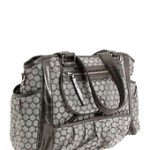
1 Large Diaper Bag — Always-to-carry contents: diapers, wipes, rash cream, little bags for diaper disposal, 1 change of clothing for each baby, bibs/burp cloths, extra bottles for formula if you formula-feed, toys, hand sanitizer … see why it has to be a large diaper bag?

DIAPERS! — If you use disposable or cloth, be prepared to go through 6-8 diapers per baby per day on average. Yes, that’s a LOT of diapers!

Diaper wipes — Again, use disposable (preferably scent-free for baby’s sensitive skin) or soft cloths moistened in water only.

Diaper rash cream — Use this cream to treat rashes and/or to prevent irritation.

Plastic Diaper-Changing Pads

Simethicone Drops for occasional gasiness in baby’s tuummy.

Infant Acetaminophen (Tylenol) for pain and fever reduction.

Manicure Set to keep baby nails trim to avoid scratching herself. Hand Mittens (or socks) help, too.

Baby Wash (many brands are for hair and body)

Crib sheets — (2-3 tight-fitting sheets per crib)

Light Crib Blankets — IMPORTANT: Remember to keep cribs free from clutter such as stuffed animals, pillows, comforter blankets, etc., due to the high risk of smothering/suffocation that can lead to SIDS.

Crib wedges — to place baby in so he will remain on his side or back (never on tummy!), and to also keep co-sleepers separated but still able to hear, feel and smell each other.

Baby Clothing:

6-8 Onsie underwear that snap between the legs per day per child. They will go through these often!

Have LOTS of onesies on hand!

2-3 soft sleepers with feet per day per baby.

15-20 baby clothes hangers

Cotton infant hats

Socks

10-12 Receiving blankets for swaddling

2-3 day outfits per child per day.

Burp cloths

Bath Towels (hooded)

Baby wash cloths

Feeding Care:

Bottle fed babies — bottles, nipples, caps, bottle washer brush, sterilizer rack, formula, and infant cereal from approximately the 4th month on.

Breast fed babies — breast pump, bottles, nipples, caps, bottle washer brush, sterilizer rack.

Breast care — 2-3 nursing bras, lanolin ointment for sore nipples (but breast milk rubbed into sore nipples works very well), hot/cold gel packs (for engorgements and occasional plugged milk ducts), breast pads (cotton or disposable).

When shopping for baby needs, you’ll see every conceivable product (pun-intended!), so enjoy, but be careful not to overspend on the latest and greatest convenience gadgets, because chances are you’ll use them once, twice or not at all!

VERY IMPORTANT PREPARATION:

Nourish Yourself: Remember what YOU eat is what YOUR BABIES will eat

Choosing what you eat and what you don’t eat is so important, before pregnancy, during pregnancy and after pregnancy. You must be mindful of the foods you put in your body. There may have been a time when eating left over pepperoni pizza for breakfast, drinking diet cola or other high-caffeine sodas all day long, and greasy cheeseburgers for dinner worked for you (or so you thought) at one time, but now that you’re a mom, EVERYTHING IS DIFFERENT. You’re completely responsible for the health, wellness and future growth and development of your babies! I’m not saying that an occasional slice of cheese cake or a lean burger now and then isn’t just fine, but NOW IS THE TIME that you learn the importance of proper, complete nutrition, because it’s just about you anymore.

* * *

Blessings and Congratulations on the soon arrival of your twins!

Let’s Talk About Twin Skin

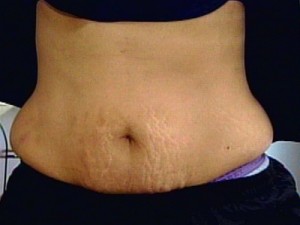
If you have delivered a set of twins, even if you didn’t go to full term with your pregnancy, the odds that your overly-stretched abdominal skin bounced right back to before-pregnancy consistency are pretty low. We are left with, what we all have come to know as, twin skin.

After my first set of twins were born, I held on to pregnancy and breastfeeding weight until I made a committed effort to lose it with the help of Weight Watchers (God bless ’em). But despite the fact that I eventually lost all (and more) that I wanted to lose, I was still left with a very loose-feeling lower stomach, and a “shelf” slightly overhanging my C-section incision. Yikes! And to think I actually believed that all the cocoa butter I rubbed all over while I was pregnant was going to prevent this from happening! Wrong.

Pregnancy number two stretched my belly further beyond the previous one because I carried these babies over four weeks longer. Although I didn’t experience any increase to my shelf-effect (because I had delivered vaginally this time), I still could hold my twin skin in both of my hands. Geez!

In the seven years between my second and third twin pregnancies, I managed to get back into pretty decent shape by eating right and exercising, which included chasing around 4 kids. But despite my thousands of sit-ups and crunches, I began to accept that my abdomen simply would never be as tight as it had been before I’d had two sets of twins. Following twin pregnancy number three, having occurred when I was over 40, well, I was in for quite a battle with my post pregnancy body! And no, neither of the photos featured in this article are of me … 😉

Twin skin is a condition that simply does not go away. It is skin stretched passed its ability to re-conform to its original, pre-stretched elasticity, resulting in saggy, wrinkly, loose-feeling skin just below the belly button. Kate (when she was being interviewed on “Jon and Kate Plus 8”) described her belly as a “bum in the front” … double handfuls of droopy skin. Fortunately, a kind and generous surgeon volunteered to give her a complimentary tummy tuck. The rest of us, however, aren’t generally given that kind of opportunity … rats!

Remedies for Stretch Marked Twin Skin?

We all know there are creams and balms out there with claims to tighten loose skin, but really, once the skin’s elasticity is gone, it’s gone. The only real remedy is to surgically remove the excess fat pockets and loose skin, pulling and tightening the remaining skin and abdominal muscles with discretely tucked sutures, tailored to each woman’s body. Tummy tucks (abdominoplasty), unfortunately, are considered cosmetic procedures and thus not covered under most medical insurance plans. Out of pocket, this procedure can cost upwards of $4,000. There are also stretch mark removal procedures, but again, probably are not covered by insurance.

So how do you deal with your post pregnancy tummy?

What remedies or methods of skin improvement have you discovered? Is there any tightening creams out there that have made any real difference for you? I, as well as all of our readers, would love to learn about any ideas, suggestions or recommendations!

Update: In 2017, I finally reached my pre-pregnancy weight (pre-FIRST set). Yay! It only took me 10 years lol. Although I lost the actual weight, my body is now different than it was in my 20s, and honestly, it’s ok. I honestly don’t know any moms that don’t refer to their post-birth tummies as their “battle scars, proudly earned”. I’ll probably never wear a bikini again, but that’s ok with me. It’s also ok for women to wear a bikini and celebrate their bodies!


Blessings ~


Your Newborn Twins CAN Tell You What They Want!

When I was lying on the sofa during my last pregnancy’s first trimester (you know, when you feel sick all the time, and have no more energy than it takes to lie around watching TV), I paid especially close attention to the Oprah show that aired one afternoon. When the announcement of upcoming guests and topics was made just as the show was starting, a chord was stuck in me, and I knew I would be giving my utmost attention to this program!

One of Oprah’s guests that day was an Australian mom named Priscilla Dunstan who shared with the audience her discovery of distinct infant cries and their meanings. I was glued to the TV because I knew that once again very soon, we would be parents to brand new infants. Ms. Dunstan in her method called Dunstan Baby Language describes the 5 different and distinguishable cry sounds that babies in their first few months of age make when they are expressing different wants and needs.

As Priscilla began to talk, I reached for already opened envelope that was on a side table nearby, picked up a less-than-sharp blue crayon, flipped over the envelope and started to jot down some notes. I had lived through the early months with two previous sets of twins, and one of the difficult and frustrating aspects was trying to translate my babies’ cries. I’d so often wished that the babies could TELL me what was wrong during fussy times that, no matter how I tried, I just couldn’t always resolve.

According to Priscilla, babies’ cries are reflexes that are detectable in 0-3 month old babies. What’s important is that you have to catch these sound signals early on, because if not responded to with the requested need readily addressed, the baby will stop using them as they get older.

So here are the 5 distinguishable sounds that infants use to express what they need:

  1. EH means I need to burp
  2. NEHmeansI’m hungry (and might be accompanied by rooting for the breast and sucking on his lil hand)
  3. OWH means I’m sleepy (with this cry usually comes the little wiggly chin)
  4. HEH means Discomfort (“I need for diaper change, I don’t like the feel of these jammies, I scratched myself”)
  5. EAIR means Abdominal Gas (I got this one a lot, and it usually turned up in the late afternoon and lasted through midnight, as colic would kick in!)

For exhausted new parents, these tips can save lots of time and ease frustration. I truly believe these sound translations are accurate because I put it to the test once Sean and Benjamin arrived, and I was amazed when I compared the sounds to what I’d learned … My husband and I really could apply a cry sound to a baby need (most of the time)!

You’ll be surprised how distinguishable these are, and how you’ll readily you’ll begin to pick up on these sounds. And again, as all mothers know, any and all tips that can ease the challenges of having newborns, (especially in multiples) are very welcomed!!


Blessings ~


Potty-Train Twins: What Fun!

Don’t we wish potty training was as CUTE as it looks?

So, my 3-year-old sons are finally full fledged on board with the program, but only a few months ago, and I’ll be the first to admit that, being so busy and distracted with a slew of other pressing issues going on in our family, I’d probably not been as diligent, committed and focused on potty training as I should have been. So, when my four older kids went back in school, I made the commitment to concentrate and devote the next few days (and probably weeks, but hopefully not months) to getting the job done!

As the mom of three sets of multiples, I’m often approached with statements like, “You’ve already successfully potty trained two sets of twins, and are now on your third … you must be a PRO … so, what’s the trick to potty training multiples?”

My first response is to say that each of my sets of twins have consisted of children who are very different from each other. Referring to them and perceiving them always as a “set”, or a collective of two little people who should be expected to behave and fit into the same mold as the other, is an incorrect assumption. We as moms of twins know already, even identical twins are complete individuals. With that said, I recall my first set of twins (my girl/girl set) having one (Lauren) being completely ready and compliant by 22 months. She showed the readiness signs of expressing her dislike of wet/soiled diapers, demonstrating an understanding of using the potty, and having dry diapers for longer periods. She also was very verbal at that point and could express her desires and understand instructions quite well. Her twin Kathryn, however, was simply not into it at all, and regardless of her sister’s accomplishments, rewards, and “big girl pretty panties”, just wasn’t interested until she hit 2 and 1/2, at which point, she was ready and basically went from diapers to training pants to cotton panties in the course of a week! I believe that ultimately, Kathryn witnessing Lauren’s successes and rewards did play a part in her decision to “get with the program”, so I do believe that a level of peer pressure is a plus! The gap of time that existed between each child’s completion of the process allowed me to focus and concentrate on one child at a time, which was a plus for me. It also allowed for some one-on-one bonding between myself and each of my daughters, one at a time.

My second set of twins are a boy and a girl. Erin would often imitate her older sisters … a REAL PLUS there! By the time she was between 22 and 24 months, she was very into pretty big girl panties like her sisters wore. Encouraging her to sit on the training potty, understanding and enjoying Elmo’s “I Can Go Potty” book, and rewarding her after her successful visits was almost too easy. She, like her big sisters, showed the emotional and physical readiness signs of graduating from diapers to panties, and by the time she was 26-28 months, she was done. Training pants were used at night, but those didn’t last too long with her either, as she would wake up dry and ready to visit the potty upon getting up. Of course, there were often some middle-of-the-night visits, too. Now, Erin’s twin Brandon’s potty training process was a completely different story all together! Although we encouraged him to sit on his own potty, and rewarded him with his successes along the way, he simply decided that the thrill was gone after a few weeks, and decided to regress almost completely after he’d demonstrated his readiness and we’d thought he was just about trained. Ultimately, Brandon was 3 and 1/2 before we could consider him finally potty trained. He was NOT HAPPY as he watched his poo-poo flush away, so we told him that it was probably a fun thing, like going down a water slide! At that point, he decided to say with each flush: “Bye-bye poo-poo, have a good ride!”

Forcing, bribing, coercing, threatening, punishing … of course, were completely ineffective, so we learned and concluded that no matter how many children you have, and regardless of the fact that as a parent, you basically handle situations in the same manner each child, the INDIVIDUAL child is going to be ready, willing and able only WHEN he or she is ready, willing and able.

Benjamin and Sean had been demonstrating the readiness signs for quite some time, and although they were well-acquainted with their own Mr. Potty, seemed to understand and enjoy Elmo’s potty book, had actually both been successful at wee-wee-ing in their potties so far, were simply not consistent, probably because Mommy hadn’t been consistent enough. With a little more time, concentration and LOTS of POSITIVE REINFORCEMENT (we’ve gone through 2 giant bags of M&Ms), I can finally say that we’re finally about done!

Benjamin finally mastered both #1 and #2 finally just before his 4th birthday. As for Sean, however, he was 4 and 1/2 before he finally decided that pooping in his pants was only going to “earn him” toys being taken away and time-outs! For months, he simply REFUSED to use the potty for #2, while successfully going #1 consistently.

It’s just amazing how strong-willed and individually-motivated (or just plain stubborn) each child can be! If you’re presently experiencing stubborn children who refuse to comply with your potty training, you’re not alone. Just be patient, be consistent with your positive and your negative reinforcement, whatever tactics you use, and don’t give up! They WILL eventually get with the program … especially when peer pressure is applied, say for instance, when it’s time to visit friends with children who are the same age (and ARE potty-trained), and also when it’s time to start school, and no other classmates “poop in their pants”!

My friend, Pam Fierro writes for About.com, as an expert on twins. Here is her advice on potty training twins, which I intend to utilize! http://multiples.about.com/od/pottytraining/tp/pottytrainingtwins.htm

Two other great site for tips: http://www.pottytrainingconcepts.com/CTGY/A-Potty-Training-Multiple.html

and Mayo Clinic’s source: http://www.mayoclinic.com/health/potty-training/CC00060

The BEST reward of all!

I wish all of you the best of success you endeavor to potty train your multiples!


8 Tips to Help You Survive your New Twins

Whether your babies arrived on or near your actual due date, or if they arrived six weeks early, when the day arrives to go home and start your lives together as a family, the thought and the reality is both exciting and frightening. As my husband and I walked out of the NICU for the last time with our first daughters, I recall looking back at the doors and wishing I could take one of the nurses with me. We lived on our own in Virginia at the time. My mother, who had been with us for about a week when the babies first arrived, was back in Florida, and my mother-in-law wasn’t planning to arrive for at least 2 weeks.

It was time to wrap our brains around the fact that we were the only ones going to care for our 4.5 lb. daughters, one of which was still under treatments for an intestinal disease that developed immediately after her birth. A visiting nurse came once every other day for about 30 minutes to check on her, and attend to her medical needs prior to surgery which was scheduled in two more weeks. Other than that contact, my husband and I were it, and that truly overwhelmed us both.

Being well-prepared ahead of time with all the baby-needs required is the best foundation for making the transition into new parenthood. And from the archives containing my own experiences of living through the arrival of three sets of twins, I’d like to give you some tips on surviving those first few weeks (or even months), when your world is so focused on around the clock diaper changing, soothing the crying and breastfeeding.

These first weeks made all the weeks on bed rest seem like a vacation!

Tips for New Parents of Twins

1- Team work. Although not impossible, taking care of two or more babies on your own would be very difficult. As soon as the lack of sleep, exhaustion and all around feeling that you’re overwhelmed kicks in, you’ll be very, very thankful that your mom, your sister, your aunt or mother-in-law is there to take over when you simply physically need a break during the day, and also appreciate every bit of assistance your husband gives when he’s at home.

2- Accept all help. Welcome with opened arms each meal a neighbor or friend drops off, and take them up on their offers to help out with your older children. There are times when we want to be completely self-sufficient in our lives, but now is not the time. Humbly accept these gifts and opportunities, and remember that one day you may be in the position to pay these favors forward for another overwhelmed mommy!

3- Take care of yourself. Proper nutrition and being well-hydrated is vital to your health, and if you don’t take care of yourself, your body’s immunity defenses break down and resistance to battling viruses are weakened. Getting sick will only make everything worse! 🙁  If you are breastfeeding your babies, your self-nourishment is also vital to their well being and growth. As with pregnancy, drinking at least 10 oz of water each hour will ensure that your milk supply will keep up with your babies’ growth and nutritional demands. Because you may be still recovering from giving birth, your body needs optimum nutrition for full recuperation and regaining of strength, especially if you’d been on bed rest prior to having your babies. Taking a vitamin supplement (in pill or shake form) can fill in all the gaps your body (and your babies’ bodies) need as your breastfeed them.

4- Stick to a routine. You’ll find that working around your babies’ feeding schedule keeps you on a ’round the clock schedule, but make sure you keep some order in your life during this crazy time, it will help keep you focused and thinking straight.

5- Take much-needed breaks. The endless cycle of feeding and care taking can take its toll on a new mom very quickly. When your help is available to take over for little while so you can nap, shower, bathe, sit outside to soak in some sun, run a quick scenery-changing errand to the grocery store, or take an older child out for a quick lunch treat at the park, you’ll find that a break from the routine can be enormously rejuvenating. Your older child(ren) will become frustrated by the now shifted attention away from him, so it’s important to spend a little one-on-one with him. Going out with your husband for a quiet dinner can be so relaxing, too, but I’ll warn you: all you’ll talk about will be the babies!

6- SLEEP! I never fully appreciated a full night’s sleep until I had my first set of twins. I also rediscovered this appreciation after my second and third sets were born. Sleeping for more than a 2.5 to 3 hour stretch can feel like a million dollar gift. Take shifts for the sake of everyone’s sanity and survival. My husband and I had an extra bed in the nursery when our second set was born, and we would take shifts for caring for the babies through the nights. I breastfed them, so I had to get up for feeds, but my guy handled the diaper changes and the soothing back to sleep. Remember this: Sleep when your baby(ies) are sleeping, as much as possible.

7- Baby soothing tips. I found that carrying (whichever baby happened to be fussy at the time) swaddled tightly in a sling close to my chest helped soothe and quiet better than anything else. Sometimes, we had a double fest, whereas I would readily enlist the help of my baby swings. Those swings, without a doubt, allowed me to maintain my sanity. For well into the next months (after live-in help went home), my baby swings allowed dinner to be prepared, laundry to be folded, dishes to be done, and the other children to be cared for. I also believed that warm baths helped tremendously just before putting the babies down for a nap so I could either get some other things done, or sleep myself! They just slept deeper and longer between feedings if the received a bath once a day.

8- Keep babies together. Twins were womb-mates, and prefer to stay close together. I always tightly swaddled and placed them close to each other. They could smell, hear and feel each other for comfort and added security. My babies shared the same crib up until they reached about five months old.

For some additional tips and advice on the first weeks with your newborns, please visit HavingTwins.com.

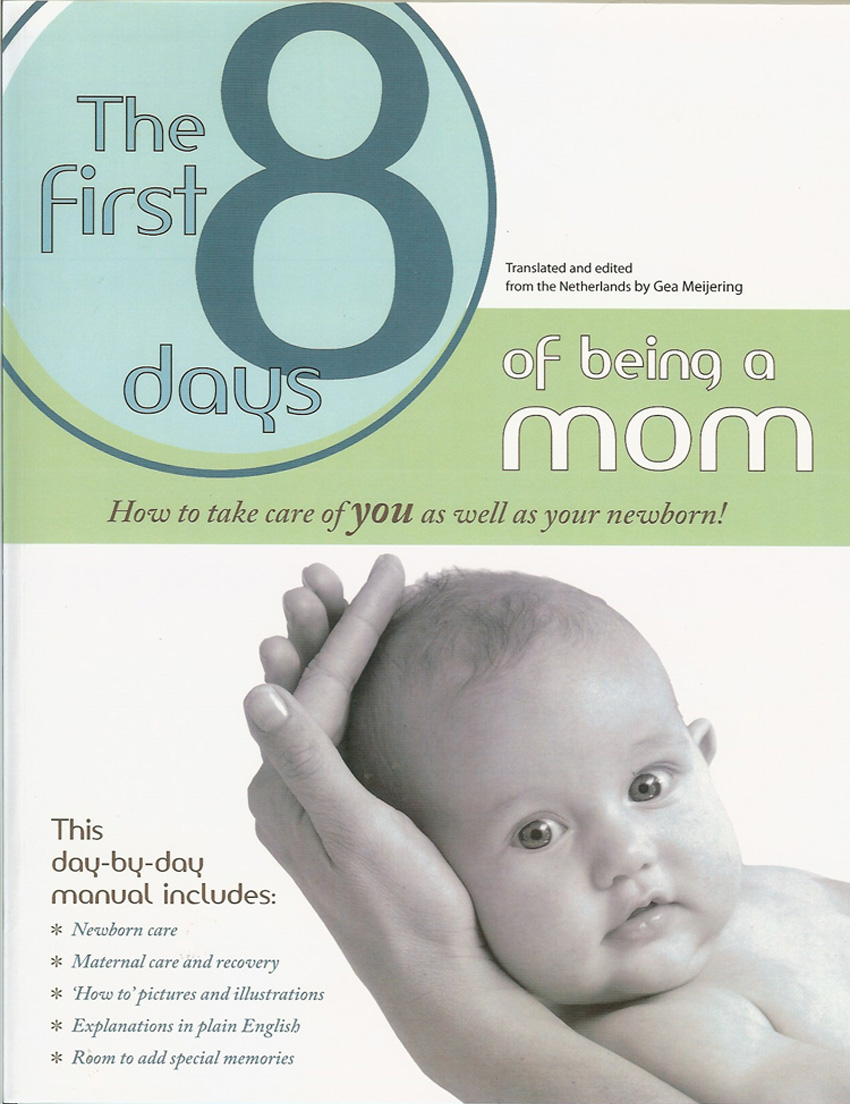
Another wonderful source for self- and baby-care during those busy first days, go to www.thefirst8days.com for tips and advice for handling your first week. Purchase my friend Gea Meijering’s translation of this popular, confidence-building, step-by-step and tip-by-tip guide from the Netherlands.


You will survive this challenging (okay, downright difficult) time, and before you know it, sleep will return, the sun will come back out, and life with your new family will be wonderful!


Blessings and Congratulations!! ~

Preventing Preterm Labor from Becoming Preterm Birth

With all pregnancies, it’s very important to become familiar with symptoms that could indicate the signs of early or preterm labor. This is especially important with a multiple pregnancy because preterm labor is much more common than with a single baby on the way.

The fact that your uterus is not only growing larger, but because of the double, triple or more babies growing and rapidly taking up space, the uterus is also growing at a faster rate than if you were carrying one baby. With a single pregnancy, as the uterus grows, it naturally contracts as part of the growth process. You’ll notice a slight pulling or tightening/hardening sensation in the lower abdomen that is completely painless and harmless, which may last for a few seconds. However, this more rapid rate of growth with a multiple pregnancy can cause the uterus to become irritable and you may notice normal growth contractions become more frequent as you reach about mid-point in your second trimester (approx. 20-22 weeks).

If the contractions begin to increase in frequency, and the tightness and temporarily hardening of the lower abdomen is accompanied by pain (mild to moderate), then your contractions may no longer be harmless. They may be becoming productive contractions, which means that cervical effacement (shortening) may be starting. Effacement occurs prior to cervical dilation during active labor, and you don’t wanna go there yet!

So, sit down, breathe deeply and relax. Stress and panic will only make the situation worse. Call your health care provider (at any time of day) and speak with an on-call nurse. She will immediately advise you to get off your feet (preferably lie down on your left side), and drink a full 8-10 ounces of water. Contractions may be brought on or worsened if you’re water intake is low and you’ve become even slightly dehydrated. Dehydration is the number one cause of muscle pain, tightening and cramping … ask any athlete or sports enthusiast. Your uterus is a big, powerful muscle and ligament-bound organ, and the muscles are very sensitive to dehydration, so DRINK A LOT OF WATER!

Are You in Preterm Labor? If your contractions continue for a good 30 minutes after hydrating yourself, call the nurse back, and she may suggest that you come into the office or go directly to the Labor & Delivery Unit at the hospital. The likelihood of actually delivering is low because of available medications that can be given to you to stop the contractions. An anti-contraction medication called Terbutaline (actually indicated for asthma treatment) may be administered first via injection after you are placed in a hospital bed. Fetal monitors are positioned on your abdomen (secured in place by velcro held stretchy belts) to keep constant tabs on the babies’ heartbeats to identify any fetal distress. Also attached to your abdomen is a contraction monitor to identify the frequency and intensity of your contractions. You can also expect a clear fluid IV to be started to quickly further hydrate you. Usually, when a bout of preterm labor occurs early in your pregnancy, some good hydration and one good dose of terbutaline may be all that’s needed to do the trick! Once the contractions have stopped and have not occurred for more than an hour or two, you can expect to be sent home.

Prescription: Partial or Complete Bed Rest. You might be sent home with the orders to start taking it more easy, to be mindful of your water intake, and perhaps you’ll be given a prescription for oral Terbutaline to taken as needed. If another episode occurs again soon after, you may be asked to greatly cut back on or eliminate all activities, which will include going to work. You may be placed on complete bed rest until you reach 34 weeks gestation, when you’ll be able to resume some light activities no longer at risk of delivering dangerously premature babies. In twins or with single births, 34 weeks gestation is the point at which all doctors strive to reach in regards to the baby’(ies) development and lowered risk of complications associated with prematurity.

Bed Rest Attitude? Gratitude! Because of the fact that your babies didn’t arrive profoundly early as a result of your 2 or more bouts of preterm labor, consider yourself extremely blessed and fortunate! Each day on bed rest is a challenge, especially if you have older children, but it is definitely a survivable, temporary situation. Count each day as a blessing and know that you are doing what is BEST for your babies: keeping them inside where they will grow stronger and healthier with each passing day, and giving them them the absolute HEALTHIEST start to their lives by committing yourself (and sacrificing) to reaching the minimum of 34 weeks. Anything past 36 weeks is “gravy” according the the health specialists, so keep focused, resolved, committed and try to keep the complaints to a minimum! 😉 And remember, this too will pass, and will be worth every minute of every hour of every day. For more info, advice and suggestions on coping with pregnancy bed rest, look for the article Surviving Bed Rest on this site!

Nature’s Timetable. You’ve followed your doctor’s orders to the letter, and only gotten off the bed or couch for bathroom trips, two to three quick showers per week, and been driven to and from your OB appointments. By following this strict routine, you are doing all that you can do to ensure that your pregnancy continues. Just be patient and take it one day at a time, because each day that you stay pregnant matters in the health and long-term wellness of your babies.

However, with all that you’ve done (or rather, not done) for now weeks or even months, labor begins again. Another (and perhaps final) trip to the hospital is in order again, and if your pregnancy gestation is prior to 34 weeks, your doctor will take all steps to stop labor. If two rounds of Terbutaline is no longer effective (your body will build up a resistance to it eventually), your doctor may start an IV drip of magnesium sulfate. This treatment is very effective in stopping labor contractions, but as it directly affects your uterine muscles, it also affects your other muscles. You’ll feel warm all over (even your tongue) and you may become very weak and sleepy. Magnesium sulfate therapy lasts between 24 and 48 hours, so hunker down and go with it. Unfortunately, side-effects do exist that are unpleasant. Nausea, vomiting and heartburn often accompany this therapy, but if your body is not tolerating the medication as these symptoms may indicate, your doctor may opt to discontinue therapy. Regular-interval blood is taken to monitor your tolerance to this drug therapy throughout this treatment, and your body may indicate intolerance to the “mag”, as it is affectionately called. Another medication that may be introduced at this point is called Procardia, (generically called Nifedipine, indicated for cardiac patients) which is being found as more effective than Terbutaline for labor-stopping purposes.

Birth Day! With all the measures taken to prolong your pregnancy, you may be looking at an extension of one to two more weeks or more! However, nature (God) has a way of sometimes overriding all the ways humanly possible to give your babies a later birthday. If your doctor sees that, despite all of the treatments, your labor is simply progressing, its time to accept that these babies are coming! If you are less than 36 weeks along, the best hands you and your babies can be in would be a hospital with a Level 3 NICU (neonatal or newborn intensive care unit). This is the highest level of infant care, and you’re in the best place. If your babies are under 30 weeks, a cesarean section (C-section) will be done. If, however, your babies are over 30 weeks (the skull bones are now firmer), and their positions are head down and engaged to enter the birth canal, you might be given the choice to deliver vaginally. If you are carrying more than two babies, however, you can count on having a C-section.

Congratulations ARE in order! Although you may have just gone through days of drama and trauma, and the unwanted and unexpected early births of your babies happened despite all your hopes, prayers, and actions taken by your health care team, your babies have arrived, and you need to know that this is (although bitter-sweet) an occasion for celebration! If your babies are very premature (arriving before 28 weeks), a high level of care and time will be needed, and there may be one or more short or long-term residual effects due to this level of prematurity.

Babies arriving between 30-34 weeks stand a much better chance at simply growing with careful care and monitoring before being sent home with you. Generally, the protocol standards neonatologists use to decide that a baby is ready for hospital release would be weight, overall health, and  gestational age. Rarely do preemies go home before they reach 37 weeks (what would have been) gestational age. The weight goal doctors like to see reached is between 1800-2000 grams (4 to 4.5 pounds). Some doctors like to see closer to 5 lbs. Other circumstances may also factor in, however, such as illness and surgery recovery, and apnea/bradycardia (referred to as “A’s & B’s”) episodes, which are very common heart/lung/breathing maturity conditions, may be occurring too frequently. Another alternative to staying hospitalized after 4.5-5 lbs. is reached and A’s &B’s are the only issue, may be to take the babies home but with the security of portable monitors that can alert you as you that an episode has occurred so you can quickly stimulate the baby to take that breath and thus prevent any further problems. SIDS (Sudden Infant Death Syndrome) occurs much more frequently and the risk time is longer with preemies.

Welcome to the world of parenthood! Buckle your seat belt and prepare now for the craziest ride of your life! Be encouraged and take comfort that despite your baby(s)’s premature arrival, and the challenges it may have presented or may still present, you will find the strength through love, devotion and commitment to be the best mother for your baby(s). Trust me, you will find the strength, and YOU’LL DO GREAT!

For other resources on premature labor’s signs, causes, treatments and prevention, please visit American Pregnancy Association and The National Institute of Child Health and Human Development.

Premature Babies. Due to the many medical complications that can develop as a result of premature birth, please refer to Premature Infant – Frequently Asked Questions, a resource on WebMD.com for a comprehensive report on what can be expected after the delivery of your premature baby(ies). Another source to check out is a research review that I co-wrote with a fellow student in a nursing school prerequisite class that I took a couple of years ago on the Developmental Interventions that can be done to improve chances of healthy growth in premature infants. Here is the link: Premature Infants/Developmental Intervention.

REMEMBER that an ounce of prevention is worth a pound of cure.

So, let’s keep those babies cookin’ inside as long as possible!

My personal preterm labor and delivery experiences

…  are basically described in the above article. I went on complete bed rest with all of my pregnancies somewhere between weeks 18-22. I, more or less, experienced each of the steps listed above, with some slight variations with each pregnancy. My second pregnancy was stretched to 35 weeks, due to, I believe, the fact that I went home with a subcutaneous intravenous line inserted in my thigh, which was attached to a little computer remote that administered regular doses of Terbutaline into my bloodstream. A visiting nurse came once per week to check my and the babies’ vitals, and alternate my I.V site from one thigh to the other. Along with this treatment came a monitoring system that I was required to use. Two to three times per day, I was required to belt myself to a contraction monitor and leave it on to read any contraction activity for one hour. Immediately afterward, I remotely transmitted the data via my telephone to an OB nurse who would read the data and call me back with the results. I was allowed five or so mild contractions per hour. One early morning just past my 35th week, the contractions numbered 27, and I was sent to the hospital. Trust me, I knew how bad I was feeling and predicted what my off-premises nurse’s instructions would be! My son (the trail blazer) arrived via vaginal birth at 4 lbs, 13 oz, and my daughter (who was out in 2 pushes) weighed 4 lbs, 6 oz. Neither had any health problems and stayed in the NICU for one week to grow a bit and overcome some mild jaundice, and are now very active, happy 11-yr-olds.

My first and my third pregnancies’ preterm bouts, however, were different. At 30 weeks with my first set of twins I went into preterm labor for the 3rd time, and although hospitalized and on treatments, my water broke at 30 weeks and 5 days. My daughters (born weighing 2 lbs., 14 oz and 3 lbs, 1 oz), were hospitalized for 6 weeks and had some health issues, but nothing long-term. They are now strong, smart, healthy 16-year-olds.

My water broke (after 2 hospital-stay bouts of preterm labor placing me on oral Terbutaline) one afternoon with no warning when my third set were 30 weeks and 5 days along, coincidentally and ironically the exact gestational age as my first set of twins. Although a vaginal birth was preferable, I was advised to go ahead with a C-section in case the babies were just too small. They were born at 4 lbs, 1 oz and 3 lbs., 11 oz. … much bigger than my daughters. Perhaps (and it s suspected) I was off my conception date a week or so. My now 3-yr-old sons are typical, healthy, and BUSY little boys!

Blessings ~


Oops Moms of Twins: Your Stress Is Showing!

“I can usually tell if

someone is stressed out or not just by looking at their belly size.”

– Dr. Mehmet Oz in First for Women


Boy, if that’s true, than we’re a stressed-out society! Is it my imagination or does it seem like more and more people, from children to seniors, seem to be harboring excessive amounts of belly fat these days? In an excerpt from a to-the-point article posted on the awareness-building and informative blog, Always sick and Tired (Help me get healthy), popular blog writer and chronic illness sufferer herself Always Sick Chick conveys to her readers after thorough research the following:

“There are obvious ways stress affects us negatively. It can cause irritability, tiredness, loss of energy, loss of appetite or an increased appetite, make us crave unhealthy things such as sugary foods with no nutritional value, etc…  All of these come together and cause weight gain, but it’s the type of weight gain that it causes that makes it different from anything else.

When we are chronically stressed out, our bodies believe we are in peril. We can thank evolution for this one, as the chronic stress of our ancestors was usually related to famine or extreme danger from a predator. Such stress meant the body needed to store up fat for fuel to keep from starving or to give extra energy for the fight or flight against the predator.

Today, though, our stress is different. We are not facing famine. Quite the contrary, in fact.  Food is plentiful. So whenever we are stressed, our bodies think we need food, even when we don’t. And as we eat that double cheeseburger, our body is storing every ounce of fat in it for the famine that it thinks is approaching, or the marathon it thinks we need to run to escape that saber tooth that no longer exists. The body does this with the help of a naturally occurring steroid produced by the body called cortisol.

You’ve no doubt seen those commercials about cortisol and how it causes stubborn belly fat. They’re selling you pills that don’t work, but their information about what causes belly fat is true according to Dr. Oz. The cortisol makes you hungry, even when you don’t need food, because you’re stressed out.”

I found that the older I became, the harder it was for me to lose my pregnancy and post-pregnancy weight, and I have had experience myself with stress-induced weight-gain and the inability to lose weight due to stress. It’s so frustrating, and the more stressed I am about the weight, the harder it is to take off … a truly vicious cycle.

Doctors and fitness experts agree that plain and simply: take in less than you burn, and you’ll lose weight; take in more than you burn and you’ll gain. Exercise while eating correctly will increase your metabolism and burn fat and calories while it also builds stronger muscle mass and allow you to have a more efficient metabolism. With more muscle mass, you’ll lose weight more quickly than if you only ate less or made better food choices because muscle burns calories, even while resting.

There’s some food for thought for you!


Blessings ~