avatar

About fran pitre

Welcome everyone! My name is Fran Pitre ... I'm the wife of a great guy, mom to 6 amazing kids who all happened to come in sets of two, I'm a graphic designer, published author of “TWINS x 3” (2019 Edition now available!), singer/songwriter, and clinical massage therapist. If you've come to this site looking for support, info and inspiration as a parent of twins, you've come to the right place!

Moms of Twins: What Can You Do When Your Twins Become Aggressive?

One minute your precious twin toddlers are playing quietly …

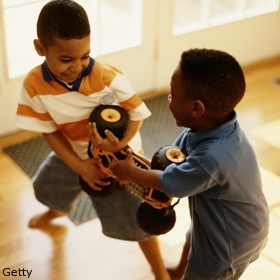
… so you take the opportunity to go into the kitchen and prepare them lunch. Just after spreading peanut butter onto one slice of bread, you suddenly hear a scream, and then another! In no time, they’re both screaming, hitting, and punching each other … what happened?! You immediately notice that they are fighting over one particular toy truck. “Luckily,” you think to yourself, “we have TWO of the same toy truck!” After giving each child his own truck, and placing some distance between the two children temporarily, you proceed back to the kitchen, where you’ve left the peanut butter and jelly sandwiches half-made.

Suddenly, the ear-piercing screams erupt again! You toss your banana-slicing knife down on to the counter top and race back into the family room, only to discover that one of the boys prefers to have BOTH trucks to himself! The greedy culprit runs and taunts his brother while your empty-handed child screams and chases his toy-hoarding twin as if he’d stolen one of his limbs!

As you rush over to break them up and spare blood loss, you realize that one had actually broken the skin of the other while biting his arm … good grief! After verbally correcting both children, hoping that your stern voice and serious facial expression has made an impression, and after washing and bandaging the wounded child’s arm, you think to yourself, “What am I supposed to do? How am I supposed to handle this? Are my children abnormally, overly aggressive? How do I put an END to this behavior?”

Does this sound like you?

And as we all know, this scenario can involve boys, girls and both, so no mom is immune!

Toddler aggression is very common in singleton siblings as well as twins.

If you’re experiencing this type of behavior, you are NOT alone. So, first know that. Secondly, it’s only natural for any child (or person for that matter) to a react as a result of any type of provocation. Even newborns react by screaming and flailing their arms while experiencing unpleasant stimuli. As children age, however, they learn that hitting, punching, biting, scratching, for instance, are effective methods to defend or to assert their needs, wants or express an injustice of some sort, and are all quick releases of frustration that match their feelings. It’s instinctive, reactive behavior to want to fight back as a method for getting the point across!

Professor’s House, a home, family, and children information resources website posts an article on childhood aggression which states: In the early years, the hitting is pretty benign. They do it because they don’t know exactly how to handle a problem. They hit because they have been hit or scratched or pushed by other kids along the way. They hit because they are angry. They hit because they truly don’t realize that their actions can cause any sort of real pain or damage. In these years – the appropriate parental behavior is to try and teach kids how to take the high road. Children should learn to ask for mediation from adults rather than handle situations themselves.

The article goes on to say: (Another way) to keep siblings from hitting each other is to give them other options. Remember they are angry, mad, and frustrated. Help them find their words and help them find solutions to the problem that don’t involve the strike of a hand. What works for each of your children will be different. Part of the reason not to hit for a kid has to be what will happen to them should they decide to do it anyways. However, your goal is to help your child deal with what they feel in the moment and give them ways to control it. When you notice that they do, they should be rewarded. The real issue is self-control. When you teach your children how to control themselves, they will be far better in the long run. This self-control may entail listening to your child throw a fit or buying them a punching bag to release their anger. They should be told time and time again that hitting can hurt people physically and emotionally until they understand this fact. Chances are your child doesn’t want to inflict injury, but just wants to get their way.

When an argument arises between your children, please consider this …

Your children must learn to work out their own disagreements. Sometimes the argument has begun over something very insignificant, and if it has occurred in the privacy of your own home, perhaps allow the children to see what solutions they can come up with on their own. I am certainly not saying that you should let them tear each other to pieces, in fact, once the fists start flying, it’s time to intervene. But, if we as parents get involved in every single altercation that our kids get themselves into, we run the risk of making the situation a lot bigger than it actually is, and we don’t allow our children to find their own way of working it out. There’s nothing wrong with verbal expression … in fact, a good shouting match (without foul language and name-calling) can go a long way in your child’s ability to stand up for himself, to defend herself, to assert himself, and to debate in a healthy, creative way even at the young age of 2 or 3!

So, the key isn’t to stop the fighting, but rather to teach the correct and civil way to disagree.

When your children begin to argue, keep in mind these 3 tips:

1) Allow them to work out the problem themselves verbally. Shouting’s okay unless the volume could wake a sleeping baby or two! Intervene when you think it’s time to suggest a solution that the children could consider and debate.

2) Intervening and making too big of a deal out of a small issue (for instance, calling a family meeting together) could drag out an otherwise “no-big-deal” situation into a much bigger problem, and may only magnify the problem and cause more stress on everyone.

3) If or when physical aggression such as hitting, biting, scratching, etc., begins, immediately intervene and correct your children by taking the item being quarreled over away (“now NO ONE gets it!”). Speak to each child impressing upon him or her that big kids don’t try to hurt each other, … that there are much better ways to argue or to express anger, …and sit them each in time-out for a cooling off period.


For the complete article from Professor’s House, go to: http://goo.gl/Hl5dn.

Blessings ~


Moms of Twins: Surviving and Thriving While Your Babies Are in the NICU!

When you discover that you’re pregnant …

… you may begin to imagine the future and ultimate delivery of your baby. You imagine your belly growing as your baby grows to full term and you prepare to deliver as your due date approaches. You imagine that Immediately after your child is born, your healthy newborn is gently placed in your happy, exhausted arms. You spend some precious time holding or putting your baby to your breast, and you bask in one of the most rewarding and wonderful moments of your life. You then see yourself surrounded by flowers and balloons, proudly holding (and showing off) your baby as you leave the hospital or birthing center ready to embark on your new life as a mommy!

Things, however, don’t always turn out as we imagined they would.

When your baby arrives prematurely, it is usually a sudden, unexpected event which leaves your head spinning in shock and disbelief. Aside from the situations where a baby is intentionally delivered early due to a life-threatening condition involving the mother, child or both, many premature deliveries occur simply because of membrane rupture (water breaking) with or without prior warning. This is especially true with a multiple pregnancy.

Because the uterus is carrying more than one baby, it is not only growing larger than it would with a single pregnancy, but because of the faster rate of growth, it can become what is referred to as “irritable”. Yes, your uterus can develop a really bad attitude. With normal growth, the uterus stretches and contracts throughout pregnancy, but increased irritability causes contractions that are more than simple stretches. Contractions can become productive, which means that they cause cervical changes such as premature effacement (shortening) and dilation (opening), which begins the process of labor. In the case of premature labor, your doctor may place you on anti-contraction medication which often stops the labor process. In serious situations where labor is difficult to stop, or that has the potential for starting again, you will be placed on partial or complete bed rest until you reach a safe gestation (approximately 34 weeks and beyond) for the baby(ies) to be born.

When Premature Labor Cannot Be Stopped

Despite all of the efforts to postpone the delivery of your babies, quite often, they come anyway.

Following the whirlwind of your early delivery, either via vaginal or C-Section, suddenly there you are: no longer pregnant.

You may be feeling a combination of: shock, trauma, anger, disappointment, loss, fear and a shameful sense of self-failure. I know this, because I experienced all of those feelings after the birth of my first set of twins at 30 weeks and five days. After months on bed rest and anti-contraction medication, no further efforts were able stop my contractions, and my baby girls were born at 2 lbs., 14 oz. and 3 lbs., 1 oz.

Immediately after each baby was born, she was whisked away to the Neonatal (newborn) Intensive Care Unit (NICU). There were no sweet, warm bundles placed in my arms.

Adjusting to Reality
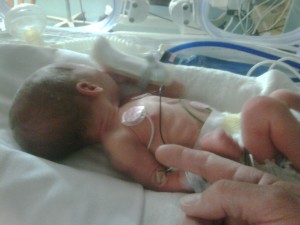
Unlike the way you always imagined, your babies are now completely under the care of the hospital neonatologist (newborn specialist physician) and of the NICU nurses. You’ve now entered a strange new world, as I did three times. As I mentioned, my first set of twins were born at 30 weeks and 5 days, and stayed hospitalized for 6 weeks. My second set were born at 35 weeks, 2 days, and although my son and daughter were born more than a month later than my first set, they were still considered premature (at 4 lbs., 13 oz. and 4 lbs., 6 oz.) and were again, taken away immediately after birth to the NICU, where they stayed just over a week. My third set threatened to come early as well, and although I was the model patient who did exactly as prescribed by my doctor (and myself), my baby boys were born (believe it or not) at 30 weeks and 5 days … exactly the same gestation as my first set, but their birth weights were heavier at 3 lbs., 11 oz. and 4 lbs., 1 oz. They stayed in the hospital for 5 and 1/2 weeks.

Because I experienced NICU babies three times over the course of 12 years, I would like to share with you my advice for, not only surviving, but for the making most of your babies’ hospitalization.

If your babies arrive early, you may be feeling …

Completely overwhelmed: You’ve just had twins, you’re recovering from birth so you’re likely being wheeled into the NICU to meet your babies for the first time. This was NOT the way you imagined, and the entire blur of events are frightening, disappointing, painful, exhausting and bitter-sweet.

Like you are a visitor instead of your baby’s mother: Although the nurses make every effort to encourage mommy/baby bonding by allowing touch, if possible, and as close contact as medically safe, you still may feel like your baby belongs to her nurse instead of you.

That you have no control as a new mother: With all of the monitors, tubes, wires, lights flashing and alarms sounding, you feel very intimidated by this strange, mysterious and frightening place. Although you know that your baby is in the best care possible, you may feel that your role as mother has been postponed. You learn one thing for sure: your arms and hands have never been scrubbed so clean in your whole life!

Frightened and worried: Depending on the gestational age of your babies, there may or may not be medical problems related to their prematurity. As you gaze at each of your precious babies in their isolette incubators attached to tubes, monitor wires, you fear that he may never grow into the beautiful, big healthy baby you expected. Try to relax and trust that the most comprehensive medical care is being given to them, and the chances of their growing and developing normally are very, very good.

Emotional: Naturally, a brand new mother experiences the sudden drop in progesterone with the sudden rise in prolactin and oxytocin in preparation for lactation … all of which brings on the weepiness! Compound those emotions with the above listed feelings, and you may just become a (temporary) puddle of tears.

Sadness about leaving the hospital empty-armed: One of the hardest experiences for a new mother is to be discharged from the hospital and go home without your baby(ies). Those feelings of failure, loss, sadness and disappointment may kick in full-force when you return to your familiar and loving home where, when you were last there, you were still pregnant. Rest assured, however, you will have the joyful experience of walking through your front door with your babies in your arms before you know it!

My sincere and experience-backed advice

Take some deep breaths and wrap your brain around what has happened. It’s a fact that your babies have arrived, are in the best care they can possibly be, and there’s no way to turn back time. So, with that said, here are some ways to make the most of this situation.

Find the joy in the situation: Although your birth experience was far from what you had planned or remotely expected, consider that new life has arrived, and that this indeed is a cause for celebration, albeit, a bitter sweet one. People will congratulate you … accept their congratulations graciously.

There are MANY ways that YOU can help your babies:

Take care of yourself: Whether you delivered vaginally or had a C-Section birth, take the time you’re home while others care for your babies to rest and heal. By the time your babies come home, you will probably be completely recovered and ready to take on the challenging and demanding role as the mom of multiples. Be sure to eat well, get enough sleep, and take good care of your own needs, because your babies are going to need you at your best.

Plan for breastfeeding by pumping your milk: You probably have made the decision to or not to breast feed your babies. Breastfeeding is the BEST nutrition for your babies, and it is very healthy for you as the next natural step in your child bearing process. Pregnancy naturally leads directly to breastfeeding. During your pregnancy, it is vital that you nourish your body the best possible way you can, both for yourself, and for your babies.

Shortly after delivery, a hospital lactation consultant visits all mothers who have indicated that they intend to breast feed their baby. In the case of your premature birth, the LC will bring a breast pump with all of the needed additional supplies into your hospital room where it will stay throughout the remainder of your stay. You will be instructed to begin pumping your first milk which is called colostrum. Colostrum is a thick yellowish substance rich in nutrition and antibodies manufactured by you specifically for your babies, and providing this perfect first food for your babies is the next, natural step in the child bearing process.

Pump, if only temporarily: If you do not plan to continue to breastfeed your babies for whatever reason, I highly recommend that mothers who deliver prematurely provide breast milk for their babies even for the first few days or weeks because the natural process of doing so connects mother with child, allowing her to feel and know that she is doing something for her babies. In fact, she’s doing the BEST THING for her babies by providing, what NICU nurses call, “liquid gold” for her premature babies. Premature breast milk is, in fact, different than full-term milk, and formulated specifically for your premature baby. From experience, pumping my breast milk for my preemies ALWAYS made me feel connected as an active contributor to the well-being and healthy growth of my babies, easing those feelings of helplessness, lack of control, guilt and disappointment caused by my early deliveries.

Be aware that you DO have a say in your babies’ care: For instance, you can specify that your babies receive only your breast milk as long as your supply is available, and to only formula feed them until you’re able to replenish the hospital’s supply when you make your next pumped milk delivery. At the same time, however, remember that your babies’ hospital stay is only temporary. If the nurses add formula or calorie boosters to your breast milk for feedings, and you don’t necessarily prefer this practice, keep in mind also that the nurses’ goal is to have your babies gain weight as soon as possible for the earliest possible discharge. Once you and your babies are home, you will make all the decisions about your babies’ care, nutrition and feeding methods.

Once you’re home, follow a routine for pumping and storing your breast milk every three hours: Once a day you should plan to ride back to the hospital with your husband or other family member and delivery your ice-packed breast milk stored in sterile bottles provided to you by the NICU. Milk let-down reflexes and even the amount of milk you produce can be enhanced if you keep photos of your babies close by, and when you breathe in your babies’ sweet scent from their little hats or blankets that you take home from the hospital. As you had specifically labeled your pumped breast milk bottles when you were still in the hospital after delivery, you will continue to do so, so that your babies are certain to receive your milk when you return for daily visits. My husband and I referred to our trips to the hospital during our babies’ NICU stays as daily “milk-runs”!

Finish preparing for your babies’ arrival: Chances are you were not fully prepared for the births of your babies when you went into premature labor and delivered them. So take this time, while your babies are hospitalized, to finish preparing the nursery, wash and fold all of your baby clothes, receiving blankets, crib sheets, etc. If you had been placed on bed rest due to your high risk pregnancy, you probably weren’t able to prepare for your babies’ arrival at all, so now you can!

Daily bonding visits: Once you feel up to it physically, plan to spend as much time with your babies as possible. Mothers are not only welcomed, but highly encouraged to spend the day with their babies. If your babies are placed together in side-by-side incubators, you may be provided a rocking chair or other comfortable chair in which to sit and breastfeed your babies for their feedings (once they reach the gestational age for gag/suck/swallow reflex coordination, at approx. 34 weeks). You can also request skin-to-skin time with your babies for further bonding. Skin-to-skin contact with their mothers increases wellness for babies. Hormones are released which calm and regulate both heart and breathing rhythm. Often, too, your babies’ nurse will encourage you to change diapers, take temperatures, prepare for feedings, and give your babies their first baths! Between feedings while your babies sleep, you can read a good book, write your birth announcements and baby gift “thank you” notes, take yourself to lunch or for a good walk around the hospital campus, or take a nap in your comfy chair before the next feeding comes around.

Bring personal items to decorate your babies’ bedside area: Bring drawings from your older children, baby clothes to have your babies dressed in, nursery items such as small stuffed animals to sit in the corner of the babies’ beds, etc., all of which allow you to feel that your babies are, in fact, YOUR babies … and that they will soon come home.
 

Babies’ homecoming

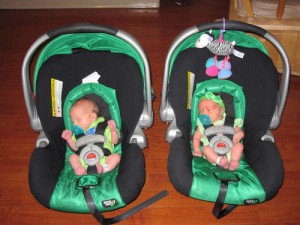
You’ll be surprised just how quickly the time will fly before your babies are released from the hospital. Sometimes, depending upon your babies’ weights, amount of breast milk or formula that they are tolerating (keeping down), and any other medical factors, you could have as little as 12 hours release notice given by the neonatologist. Once the doctor signs the discharge orders, your baby or babies are going home! Prior to discharge, you may be required to take an Infant CPR course, which is common hospital protocol for parents. If your baby is released on the condition that he or she goes home with an apnea/bradycardia monitor to alert you of any continuing apnea episodes (that can be common with preemies, and which they outgrow with further maturation), you will be required to attend a home monitor training class. Some hospitals also require parents to “Room-in” one night with their babies in the hospital (spend a night with their baby at the hospital the night before discharge in a special room decorated like a hotel room), so that if any questions arise during the night, there are nurses available to assist.

Once you say good bye to the NICU area where you’ve spent so many weeks and take your babies home, you’ll probably wish to bring a nurse or two home with you! You may wonder why you wanted your babies to come home earlier when you’re faced with the complete, 24/7 care of your babies!

Welcome to twin parenthood!

It may have arrived at a time you hadn’t expected, but it has indeed arrived.


Congratulations … and many blessings to you and your new babies!

A Mother’s Day Salute to Moms of Twins and ALL Moms!

As a tribute to all moms, including moms of multiples, I wanted to do a little background research on the celebration of Mother’s Day and share it with you. What I didn’t realize was what a long, involved history Mother’s Day in fact has! Enjoy the following history lesson … because there will be a test. 😉

Rooted in religion and peace-restoration

Going back to the 17th century, the early Christians in England celebrated a day devoted to Mary, the Mother of Jesus, and eventually expanded to include all mothers calling it “Mothering Day”, honoring the mothers of England. As Christianity spread throughout Europe, the occasion changed to celebrate and honor “Mother Church”, who provided spiritual protection and was the source of spiritual birth. As time went on, all mothers were honored on Mothering Day as well, celebrated just before the holy feast of Easter.

Julia Ward Howe

When the American colonies were being settled, the English settlers all but forgot Mothering Day due to lack of time and attention. During the Civil War, a British American woman and social activist named Julia Ward Howe (who composed the lyrics to The Battle Hymn of the Republic) was horrified by the death and destruction of war and began a campaign to instill the British tradition of Mothering Day into American culture. She began a crusade against war, and put out an appeal to all women and mothers for peace. In 1872, she went to London to promote an international Women’s Peace Congress. She began promoting the idea of a “Mother’s Day for Peace” to be celebrated on June 2, honoring peace, motherhood and womanhood. Howe failed in her attempt to get the formal recognition of a Mother’s Day for Peace, but it became the precursor to our modern day Mother’s Day.

Ann Jarvis, The Mother of Mother’s Day

Influenced by Howe’s efforts to build awareness of the mothers’ role as peace and wellness provider in the family, an Appalachian homemaker named Ann Marie Reeves Jarvis began to spread the awareness of better home cleanliness and sanitation, having been influenced by her physician brother. In what she called Mother’s Friendship Day, she worked and led other women to help heal the nation in the years following the Civil War. As Jarvis’ health began to deteriorate, she was cared for her two daughters, Anna and her sister Elsinore. The two sisters devoted their lives to caring for their mother and continuing their mother’s cause following her death. In 1907, the two women helped to establish Mother’s Day as a nationally-recognized day to remember, celebrate and honor all mothers, living and dead.

Officially named “Mother’s Day”

On May 10, 1908, the first official Mother’s Day was celebrated in Grafton, West Virginia, where Jarvis and her daughters had lived, and where today stands the International Mother’s Day Shrine. The Mother’s Day International Association came into being on December 12, 1912, to promote and encourage meaningful observances of the event, and some states then began to officially declare Mother’s Day a holiday to fall on the second Sunday of May. In 1914 President Woodrow Wilson made the first official announcement proclaiming Mother’s Day a national holiday that was to be held each year on the 2nd Sunday of May.

Though the original spirit of honoring mothers remained the same, what began as a religious service expanded quickly into a more secular observance leading to giving of flowers, cards, and gifts. Although Ann Jarvis was pleased with the growing popularity of Mother’s Day before her death, she was very dismayed about the growing commercial focus of the occasion … including banners and flags to announce the upcoming day.

Mother’s Day is now celebrated not so much with flags anymore, but now with gifts, cards, hugs, thank you’s and other symbols of affection. The restaurant industry reports that Mother’s Day proves the most popular day for families to eat out! It is celebrated all over the world as a day to acknowledge all mothers and the contributions they made and continue to make in the lives of her children.

It’s all about being thankful

As a mom, and as a daughter, daughter-in-law, and granddaughter of a some very outstanding women, I look forward to Mother’s Day (in addition to most other days) in order to remind my mother, my mother-in-law and all the moms in my life how special, unique, loved and respected each one of them is. There was a time when I thought I’d never be a mother, so when this day comes around, I’m not only thankful for my mother, but also very thankful to be a mother.

How do you and your family celebrate Mother’s Day? Will you travel to spend the day with your own mother? Since we don’t live close to either my or my husband’s mom, we’ll be calling (or attempting to call) each Mother’s Day Sunday to talk and send our love and best wishes.

My family spoils me on Mother’s Day, not usually with eating out (since all the restaurants are just too crowded), but usually with homemade cards created out of construction paper and crayons, some potted flowers that we can plant in one of our flower beds, and a barbeque with all the fixings!

I truly admire all of you moms today because, as we all know, we wear so many hats, and are demanded in ways that women in past decades couldn’t even imagine. I wish all of you, especially all of my moms of twins friends, a beautiful Mother’s day full of relaxation, fun, laughter, hugs, kisses and the spoiling you deserve! Be thankful to your mother for the life and lessons she gave and continues to give you, … and be thankful that those precious children of yours will allow you to be the honorable recipient of love this Sunday!

For the complete Mother’s Day History story, please visit: http://www.theholidayspot.com/mothersday/history.htm

Happy, Blessed Mother’s Day!


Traveling with Twins!

Over the river and through the woods, to grandmother’s house we go!

If you’re concerned whether traveling with your infants or toddlers will be a delight or a disaster, I can help with some suggestions after traveling with lots of kids of all ages for quite a few years now.

Now, although I can’t guarantee that your travels with tots will be necessarily delightful, I can give you some tips that will definitely have you prepared so you’re not ambushed by the unexpected, or have miserable experiences as you travel to and return from your vacation destinations.

 Tips for Traveling with Twins

When I traveled (as a solo-parent) with four young children by air from Florida to California (with a connection in Atlanta), I found that the following system worked beautifully:

Allow each child over 3 years of age to pack up his or her own special backpack. Pack it with coloring books and crayons, hand-held video games (with volume control), magna-doodles, special toys including a “lovey”, a small travel pillow, and favorite snacks (specially chosen by each specific child) so that these feel comfortable, are kept busy, and happily occupied!

If any of your children have ever displayed even the slightest tendency toward motion-sickness, I would HIGHLY RECOMMEND that you give him/her/them a chewable, 12-hour-lasting motion sickness medication such as Children’s Bonine or the less-drowsy formula of Children’s Dramamine approximately 30-minutes before starting to travel. I am not recommending that you “drug” your children, but to avoid motion sickness and all the joy and drama that goes along with it, I always made sure to give my “easily-queezy” little ones that dose of prevention!

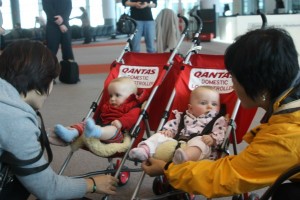
If traveling by air, you’ll need to bring the double stroller for all of the walking you’ll do through the airports, etc. Your stroller (along with other passengers’ strollers) will be loaded onto the plane after you board, and will be available for you as you exit the plane. You’ll need to baggage-check their car seats or stroll your babies in the rolling carts for car seats that are popular today, because you’ll need your car seats with you for traveling locally when you arrive at your destination. If you prefer to strap your babies into car seats in individual airplane seats, you may have to buy a separate ticket for them, which is why most decide to travel with their babies in their arms/laps. When on the plane, allow the older children a bit of independence by encouraging them to get up (when permitted), stretch their legs, and use the restroom by themselves. It may sound like much of an adventure from an adult’s perspective, but my children thought it was a blast!

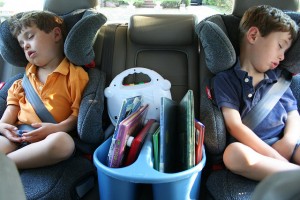
•  On a road trip, try to leave as early as possible after getting as much sleep as possible. I also recommend packing up easy meals so that you don’t have to rely on finding fast food (or paying out of the nose for it). The night before traveling, I make a sandwich for each person (who eats table food) for two meals, pack the ice chest with the sandwiches, fruit, crackers, chips, juice boxes, yogurt, etc. I’m always careful to pack plastic spoons or forks as needed, and plenty of paper plates and paper towels. Stop every few hours for a chance to get out, go to the restroom, have a picnic lunch, run around and release some energy. Plan stops where you can find a park, or even just a rest-stop with some open space (but watch for land minds left by traveling doggies!).

 Tips for What to Bring on Road Trips

On road trips (which is our most-used method of travel now that there are eight of us … nine if you count our new pooch Simon, and not counting our cat Shannon, since she stays home and is cared for by a neighboring, trusted teenager), I pack us as efficiently as possible, and allow easy reach within the vehicle the following important items:

  The pack-n-play sleepers for my toddlers for their sleeping accommodations in hotels and at Grandma’s house;

•  snap-on-table high/booster chairs for restaurants (so you’re not using the establishment’s “icky” ones);

  LOTS of hand sanitizer, sanitizing wipes, baby wipes, paper towels and plastic (left-over grocery bags) for garbage, food wrappers, and in the event that the Dramamine failed or wasn’t given to someone who probably needed it. For babies/toddlers, pack that diaper bag with at least one full change of clothing for each baby and enough diapers to last a whole day.

  One full day’s worth of baby foods (with bibs and spoons) and/or formula for non-breastfeeding moms.

  Medications and first aid supplies such as pain reliever, bandages, antibiotic ointment, decongestant, cough suppressant, antacids, lip balm, moisturizing skin lotion (as traveling tends to dry out our skin), and any medications specifically needed by each person.

  Plenty of water for each person.

(Be aware that if traveling via air, you will not be able to carry on any bottled liquids larger than 3 ounces, but this excludes pre-filled baby bottles, nursery water, baby-specific medications such as Mylicon (simethicone drops for gas relief, but this is usually in 1/2-oz. bottles). Water and other beverages will be provided by the flight crew once the aircraft reaches cruising altitude. I’ve always found flight crews to be very accommodating to us with our family’s needs.

Travel tips for breastfeeding moms

Whether you’re traveling by ground or air, you know you’ll need to feed your babies every three hours or on demand, regardless of where you happen to be when feeding time arrives, so make sure you carry along with you:

  your nursing pillow(s)/boppie pillow;

  a portable, battery-operated or manual breast pump/bottles with nipples and caps (and cold pack, insulated carrying case);

  privacy blankets and burp cloths;

  nursing pads, and extra bra and shirt/blouse for you in the event the babies’ feedings are delayed here and there.

Obviously, you cannot breastfeed in a moving car because the babies need to remain safely buckled into their car seats, and you need to stay buckled up as well, so make the most of your rest stop nursing time by doing double-up (tandem) feedings. If you have older children, have Daddy take them off for a bit of leg-stretching and energy-releasing exercise so you can have some quiet time with the babies.

I found that sitting in a back seat of the vehicle with my support pillow(s) across my lap gave great support. Taking this twenty minute quiet time away from the continuous motion and noise of the vehicle to allow the babies (and yourself) a good feeding will be very relaxing and you’ll find it to be a very-needed break. You’ll all become relaxed and ready for the next 3 hours of travel before the next feeding.

Nursing on an airplane is a bit more challenging, especially as you try to keep the crying babies quiet. We may say that we don’t care about the glaring, irritated looks from the other passengers, but we do care. Settling your babies down by comforting them at the breast is the perfect solution to ease their fears, calm their anxieties, and warm their tummies. To tandem feed, lift up the armrest between two seats and sit between the two, providing room for you to comfortably feed both babies. If the aircraft is completely full, as it probably is during the holidays, you may have limited space and will to get creative with a cross-over feeding position for both babies, or feed them separately (feeding the fussier one first!)


Whether you plan to travel by air or ground, being completely prepared and ready for anything (because those what-if’s are bound to happen) will alleviate stress and anxiety for the whole family, and allow your whole vacation to be remembered with fond memories.

If you find these tips helpful for you, please share this article on to other families with multiples, or just a few kids or more!

SAFE TRAVELS!


Comments About Twins, and Our Witty Replies!

I so enjoy visiting online moms-of-twins forums. Combining my personal experiences with the experiences and topics discussed on these forums, I’ll simply never run out of discussion material to address and blog about!

A few days ago, one twins-mom named Samantha asked our group:

“What are some of the craziest stranger questions or comments you’ve received being out in public with your twins, and what were your replies?”

Oh, this is a good one! I requested the use of some of these comments for this post with the assurance that only first names would be accredited to the various comments, and my additions are in blue. So here goes:

(BTW: the last word in the green box to the left should be ANYWAY (lol))

Amber: One of the best ones I saw was when you get, “You have your hands full!” You say, “You should see my heart!” I love that one.  (If I had a DIME for every time someone said that to me, I’d have college tuition for at least one kid!)

Kimberlie: I get “how do you tell them apart?” I get this question a lot, and I always say “Because I am their mama and mama knows”.

Samantha: When people come up to me and say “Double Trouble”, I like to say “Double the Love” 🙂 (I add, double the fun!)

Heather: Well I’m sure we all get the random stranger at the store saying….“glad it’s u and not me”, to them I say “me too”!

Amy: I get “were they natural“?.. I say, well I gave birth to them …

Shelly: Ha! People ask me about the “were they natural?” question (I really think they do not realize HOW invasive a question that is!?) I usually laugh it off and say “Stay away from Barry White, track 5”. (love it!)

Michele: When I get “are they natural?” I say “well no, I had a c section, why do you ask?”

Carissa: If I get asked of we used fertility drugs, I say “does wine count?” (ha! love that, too!)

Carey: I hear the “Oh you have your hands full” and I reply with “Better full than empty” And for the “were they natural” there is a video out there called: “They Are Not Aliens”.

Michele: I like to say that “I had sex twice in one night, and once with hubby, once with, oh I’m not sure who, was it you?” i love their stunned looked. And sometimes I’ll add “if you ask a stranger an invasive personal question, you should be prepared for whatever answer you get!” (you go, girl!)

Wendy: I used to get asked all the time if my b/g twins are identical…lol Guess people don’t know what the word identical means. It used to drive me nuts! (I got that one many times with my boy/girl set … I mean, really?)

Amanda: My favorite question is: Are they twins? My response (at least what I would love to say but bite my tongue) “No I cloned my baby, that’s why they look exactly alike.”

Amy: When asked if they are twins I usually say “no they are born a month apart” and then when they ask are they girls when clearly they are both wearing bows, I just say “no they are boys but I really wanted girls”…lol! My mother in law about died when I told a lady that in a grocery store…lol (LOL)

Tammy: When my girls were toddlers and people would ask “do twins run in your family?” I would say “No, but they run all over my house!” And whenever I hear “I’m glad it’s you and not me”– I always smile and answer: “So are they!”… most people don’t catch on, which makes it all the better.

Chielo: I have two set ID twins and people always ask me if I planned to have twins. (Don’t all of us PLAN to have twins? Really?)

Bonnie: Usually when asked “are they twins” I’d tell them “no, they were having a buy one get one special at the hospital!”

Valerie: We were out trick ‘r treating with the twins and some lady walks up and gets in the babies faces to see if they are real. I told my husband if she actually asked I would tell her… nope we put 2 stuffed animals in a stroller to get candy! lol

Calley: To the “are they natural” question I always smile and say no…they are supernatural….it always makes me giggle and they kinda stop asking questions wondering if I am crazy or not….

Debora: Everywhere we go, everything we do, our identical twin girls are attention grabbers. We just plan extra time, smile, and introduce our 3yo girl and 7yo girl so they feel included. And we stress the amazing BLESSING we have. When people comment “How Cute!” to our twins, my husband says, “Well thanks, I am very cute! But what about our FOUR girls???”


Thanks ladies for your creative and clever replies. Over the years I’ve been approached just about all of the above, with a few more additions, like:

— “Are all of those YOURS? OMG, and they’re ALL TWINS? … Harold, HAROLD! Look, this woman has 3 SETS OF TWINS!!”

— “You know they figured out what causes having children …” (wow, that’s some nerve!)

— “Are they all paternal (or maternal)?” I reply, “Yes, they are FRATernal.

My advice: Have fun, just go with it, laugh it off, come up with clever come-backs, and ENJOY living the BLESSING of having TWINS!  🙂  🙂


Yikes! Twins in Big-Kid Twin Beds!


It’s been just over a year since my little guys (my 3rd set) left their cribs and graduated to their big kid beds. Transitioning out of cribs has never been a favorite phase of mine, and the reasons are obvious: they are no longer in the safety, security and (I’ll be honest) the controlled-restriction of their cribs! They would now be entering the adventurous world of “being loose” in big kid beds.

At 13 months, I placed crib tents (the white, high-domed netted, zip-up tents) upon their cribs because they began to demonstrate their frightening abilities to lift one leg over the side not knowing what would result could be a terrible fall. At one point, Benjamin nearly fell directly on his head, and would have if not for the cat-like reflexes of his mom catching him. Of course, it took his mom several minutes to recover from the use of her cat-like reflexes and sudden rush of adrenaline.

I used those same crib tents on my previous twins’ cribs because at 11 months one climbed out, and the other while witnessing in amazement, followed right after! I recall sitting on the floor and sobbing. I had two five-year-old twins and two not-even-one-year old boy/girl twins, and I needed NAP time for the babies to be easy and reliable so I could continue to home school my then kindergarteners. My mom, who had seen the crib tents while watching a television documentary on a family with quadruplets, immediately ran out and bought them for me when I wept that “the babies can climb out of their beds” to her over the phone that very day. She called her purchase of them a $130 investment in my sanity! By the time my middle set reached 2 and 1/2, they transitioned into big-kid beds, and by then I was, well, a little more ready.

As for my 3rd set, I knew the time had arrived when I noticed evidence of the attempts of a prison break from their tented cribs. Ben’s tent began to show his efforts of his trying to escape, as if he’d stashed a spoon from the prison cafeteria up his sleeve … I detected little holes in the white netting here and there that became bigger and bigger. Sean decided to pull at a corner seam along the inside of his crib tent and was able to push those wet diapers out and onto the floor that he so often would shed, only to then wet his crib sheets!

So there we were. We’d taken down the twin cribs for the third and LAST time, and set up the twin bunk beds that double as individual single beds against two opposite walls, each having its own bed rail. We’d bought these beds when I was pregnant with my second set of twins so that my eldest twins (4-year-olds at the time) would no longer have to share a full size bed together (which they graduated to from their cribs), and would finally have their own big girl beds.

As most of us who’ve been through this transition have experienced, the BIGGEST CHALLENGE now lay with KEEPING THEM IN BED once nap or bed time arrived. It was so bad with our first set, that we, out of desperation, would take “bed-time drives” around our neighborhood. This drive would begin after jammies were on and teeth were brushed so that the girls would fall asleep in the car after about 10-15 minutes, after which we would lift them out of their car seats and lay them down in their shared bed. We gated their bedroom into the hall so that if they awoke and we didn’t hear them, they couldn’t leave their room and get into any trouble/danger in the rest of the house while we slept.

REFUSING to resorting to this method with my second set, I simply told them to stay in bed! When they got out to play some more, I’d go right in and threaten them with “toy taking”, “no playground the next day”, or something to that effect. The family room was just off the kids’ rooms hallway, so I could hear every sound and could quickly zoom in there. Eventually they would settle down. Sigh. Yes, their room was gated as well.

This time around, well, the kids rooms are upstairs. My biggest challenge is that when I believe they’re settled and quiet, I leave to return downstairs, only to hear the “pitter-patter” above me! This, of course, occurs after we’ve had their settle-down story, said our prayers, had a quiet night-night song, and each had a snuggle and back rub once they’re tucked in. Some nights they stay in bed and crash, while other nights I find myself making many runs up the stairs, finding that they’d heard me coming (no matter how quietly I believe I’m prancing) and quickly jump back into their beds, slyly now resembling the little angels I’d left only minutes before.

Some nights I recruit one of my older kids to be on Patrol. Usually Brandon, whose room is just across from Ben and Sean’s, will be report the status of the toddlers who should be in bed. Bruce and I can resume our evening duties of laundry folding, bill-paying or simply TV-watching while Brandon gives us a regular report from the top of the stairs every few minutes. If one or both toddlers are “being naughty”, he’ll startle them with a quick, “GET BACK IN BED!” order … following which they quickly scamper back into their beds!

Now at having just turned 4, we still have trouble keeping them in bed once they’re told to stay there, but it is definitely getting better! These milestones and transition phases will always teach us new ways of handling the situations, but, as it is with all children, they’re ALL DIFFERENT and need to be handled somewhat differently depending upon personalities, will-power, and their reactions to being disciplined.


But rest assured, you can always expect an adventure when it comes to parenting multiples!

Blessings ~

Hey, It’s Natural to Feel Stressed as a Mom of Twins!

It’s no surprise that we are all under enormous amounts of stress! Often, we put pressure on ourselves to achieve more, and do everything better or faster than we already do. Some of our stress is from outside forces such as an unexpected job loss, illness, death of a loved-one, a spouse deployed to war, while some sources of stress are expected, such as the birth of a new baby or arrival of twins/triplets, but its intensity and duration are unexpected. Honestly, three of the most stressful and exhausting times in my life were the first few months following the births of my twins.

5 Common Causes of Stress

1. Relationships (dating, planning a wedding, marital problems, divorce, problems between parent and child, everyday demands of family life);

2. Environment (moving, retirement, travel);

3. Death (of a close family member or friend, whether expected or unexpected);

4. Health (being given a frightening or life-threatening diagnosis, difficult pregnancy, new baby(ies), weight-gain);

5. Work (pressures to perform on the job, personality conflicts, fear of losing one’s job or of demotion).

There! We made it into two of the five, and most impressively into the #1 cause! With all that we take on, are asked to take on, or with what happens in our lives as a result of this fast-paced life in 2011, it’s no wonder we’re all stressed-out!

MayoClinic.com provides one reliable source for understanding stress and finding the ways that work best for you to ease the stress and the symptoms.

I find now with toddlers, and found especially while my babies were all infants, that taking advantage of the times between feedings when they were asleep or at least quiet (and in the care of my husband or of my visiting mother or mother-in-law), I would find a room far on the other side of the house and SLEEP. Sleep is so incredibly recuperative and beneficial to our brains, exhausted bodies and nerves, that even an hour to 2-hour nap can work wonders.

EXERCISE, for instance, taking a stroller walk (good fresh air for babies and you), doing some stationary stretching, a yoga video, or whatever gets your blood circulating, your heart rate up a bit, and your breathing deep helps to release the pent-up stress and tension that invariably builds up under the enormous demands of new motherhood. If you’re up to it, and you’re doctor has given you the thumbs up, a good roll in the hay with hubby is a wonderful stress-releaser … for both of you, and you both more than deserve it!

Sometimes, just GETTING OUT for a change of scenery (lunch out with a friend, a walk in the park, grocery shopping) can cleanse the mind, body and rejuvenate the spirit to actually have you looking forward to going home and nuzzling up to your babies for their next feeding … at least until the demands start piling up on you again, in which case, I recommend you repeat the above suggestions again …. and again.

If you enjoyed or related to this article, please post a comment.

Blessings ~